
Efficiency Over Exhaustion: Rethinking Traditional Crew Tactics
As wildland fire seasons grow in intensity and frequency, the traditional “boots on the ground” approach faces unprecedented strain. Currently, standard suppression often relies on a five-person crew managing a single hose and nozzle—a labor-intensive process that tethers valuable human resources to one physical point. To meet the challenges of modern mega-fires, we must evolve. Transitioning toward automated sprinkler systems offers a scalable, high-efficiency alternative that fortifies the fire-line while allowing crews to pivot to higher-priority tactical maneuvers.
The Multiplier Effect: Maximizing Saturation and Manpower
The primary merit of a sprinkler-based strategy lies in its superior water distribution and manpower optimization. While a manual nozzle requires constant human operation to wet a specific fuel area, a series of high-volume sprinklers can saturate an entire line simultaneously. This creates a deep, consistent “wet line” with a lot less manpower. Mechanically, a single pump operator can maintain a system that covers the same distance as several traditional crews. By increasing the volume of water delivered per square meter in less time, we effectively cover a broader front. This shift doesn’t just save time; it creates a more formidable barrier against fire spread.
The Ultimate Defensive Line: Unattended Operation and Evacuation Resilience
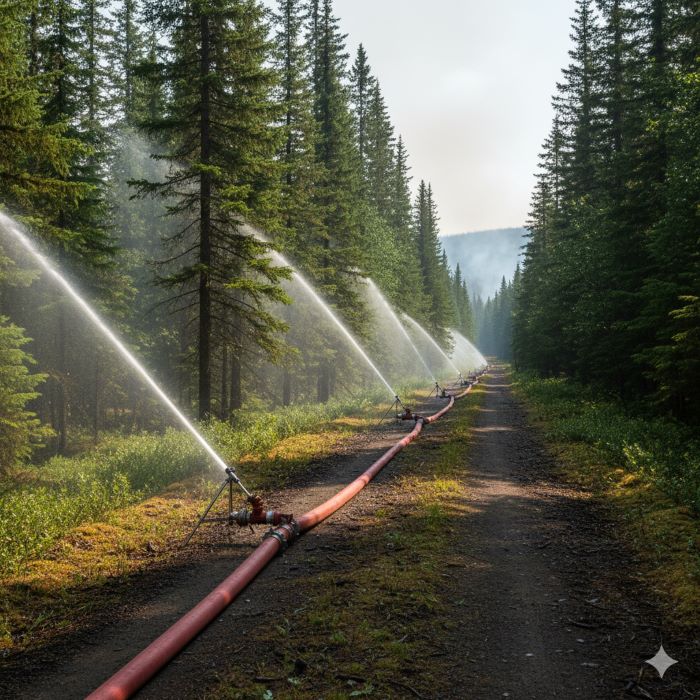
Perhaps the most critical advantage of strategic sprinkler systems in modern wildfire control is their ability to maintain a wet line when conditions become untenable for human crews. As wildfire intensity increases, heavy, choking smoke and rapid fire spread often force personnel to evacuate a section of the fire line for their safety. In a traditional 5-person crew setup, this means suppression efforts cease entirely on that line. However, a properly designed and deployed sprinkler array, like the one pictured, can be left running at maximum output even after crews have retreated to a safe zone.
A Scalable Future: Embracing High-Output Solutions
In an era defined by extreme fire behavior, clinging to outdated manual-only methods is a risk we can no longer afford. Adopting sprinkler technology represents a shift toward “smarter” firefighting—prioritizing saturation and efficiency over raw physical labor. By reducing the number of personnel required for line maintenance, we protect our most valuable asset: the firefighters themselves. It is time to embrace these high-output systems to ensure our forests and communities remain resilient.